Why Do I Get Spots Before My Period?
Spots that show up right before your period are very common and are driven by hormonal shifts during the luteal phase. Here's why your skin reacts this way, what can make things worse, and what you can observe or adjust.
In this article
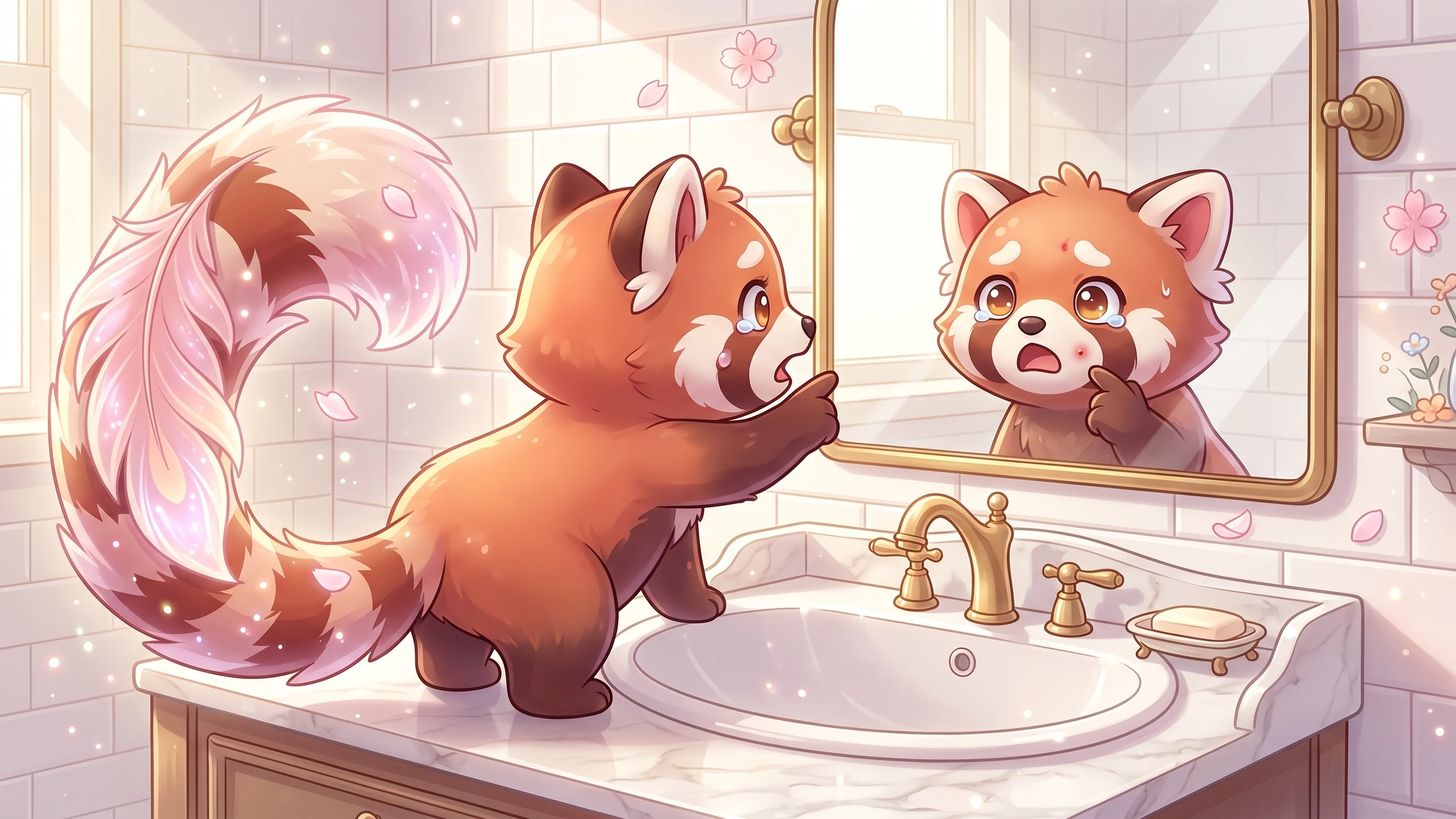
Spots that flare up just before your period are one of the most common skin complaints in the second half of the cycle. It has nothing to do with hygiene or bad luck — hormones are mainly to blame.
What's happening in your skin before your period
It all starts with the sebaceous glands — tiny glands sitting just beneath the skin's surface. Their job is to produce sebum to keep skin moisturised. The catch is that they're particularly sensitive to hormones, especially androgens (including testosterone). When androgen levels rise, or when other hormones drop, the sebaceous glands can produce more sebum than the skin actually needs.
During the luteal phase — the window between ovulation and the start of your period — oestrogen and progesterone levels shift rapidly. This relative hormonal imbalance can stimulate sebum production. The excess sebum mixes with dead skin cells and forms a plug inside the follicle. If that plug sits close to the surface, it becomes a whitehead (closed comedone); if it's open to the air, it darkens into a blackhead. Bacteria that normally live harmlessly on the skin can then colonise these blocked follicles and trigger red spots, pustules, or even nodules.
The NHS notes that "some women develop a flare-up of acne just before their period", and that hormonal changes linked to the menstrual cycle are among the well-recognised acne triggers in adult women.
Why are some people more affected than others?
Sensitivity to hormonal fluctuations varies enormously from person to person. Acne also has a genetic component: if your parents had it, you're more likely to develop it too. But that doesn't mean there's nothing you can do about it.
Certain factors can make breakouts worse, regardless of where you are in your cycle:
- Unsuitable skincare products: products containing oils or so-called "comedogenic" ingredients can clog pores and amplify the reaction.
- Certain medications: ameli.fr mentions in particular some oral contraceptives containing progestogens with androgenic activity, corticosteroids, and some anti-epileptic drugs.
- Stress: without directly causing acne, it encourages picking at spots, which worsens the lesions.
- Over-cleansing: washing your face more than twice a day can irritate the skin and make symptoms worse.
What to observe in your cycle
If your spots appear regularly in the second half of your cycle — roughly one to two weeks before your period — and clear up with or shortly after your period starts, that pattern fits well with a hormonal cause. Logging it in an app like Plumm helps you spot this rhythm and distinguish cyclical breakouts from spots that have no connection to your cycle at all.
If, on the other hand, spots are present throughout your cycle with no link to your period, or if they come alongside other signs (irregular or absent periods, unusual hair growth, hair loss, weight gain), it's worth seeing a doctor to look for other causes, including a hormonal imbalance.
Some practical adjustments for your routine
These tips don't replace medical treatment, but they can help reduce aggravating factors:
- Choose non-comedogenic products — formulated not to block pores. Look for the label on the packaging.
- Cleanse your face a maximum of twice a day with a gentle cleanser and lukewarm water — very hot or very cold water can irritate skin.
- Don't squeeze your spots: it can worsen inflammation and leave scars.
- Remove your make-up every evening, even when you're tired.
- Rinse off quickly after exercise: sweat can irritate acne-prone areas.
When to see a doctor
A mild, cyclical breakout before your period doesn't necessarily call for a medical appointment. However, if spots are numerous, painful, deep (nodules), or leaving scars, a GP or dermatologist can offer appropriate treatment. There are topical options (creams, gels) and oral treatments, prescribed according to severity and individual profile. Ameli.fr notes that the first results from acne treatment aren't visible for at least two months — patience is part of the process.
If your spots are accompanied by very irregular or absent periods, unusual hair growth, or unexplained weight gain, mention it to your doctor — these signs together may point towards a hormonal work-up to rule out polycystic ovary syndrome or another endocrine imbalance.
To explore other common symptoms in the premenstrual window, you might also want to read the articles on sore and tender breasts before your period or bloating and gas — often, several symptoms arrive at the same time.