Why do my breasts feel awful before my period?
Swollen, hypersensitive, or downright painful breasts in the days before your period are common and have a name: cyclic mastalgia. The cause is the hormonal shifts of the second half of your cycle. Here's what's actually going on — and what can help.
In this article
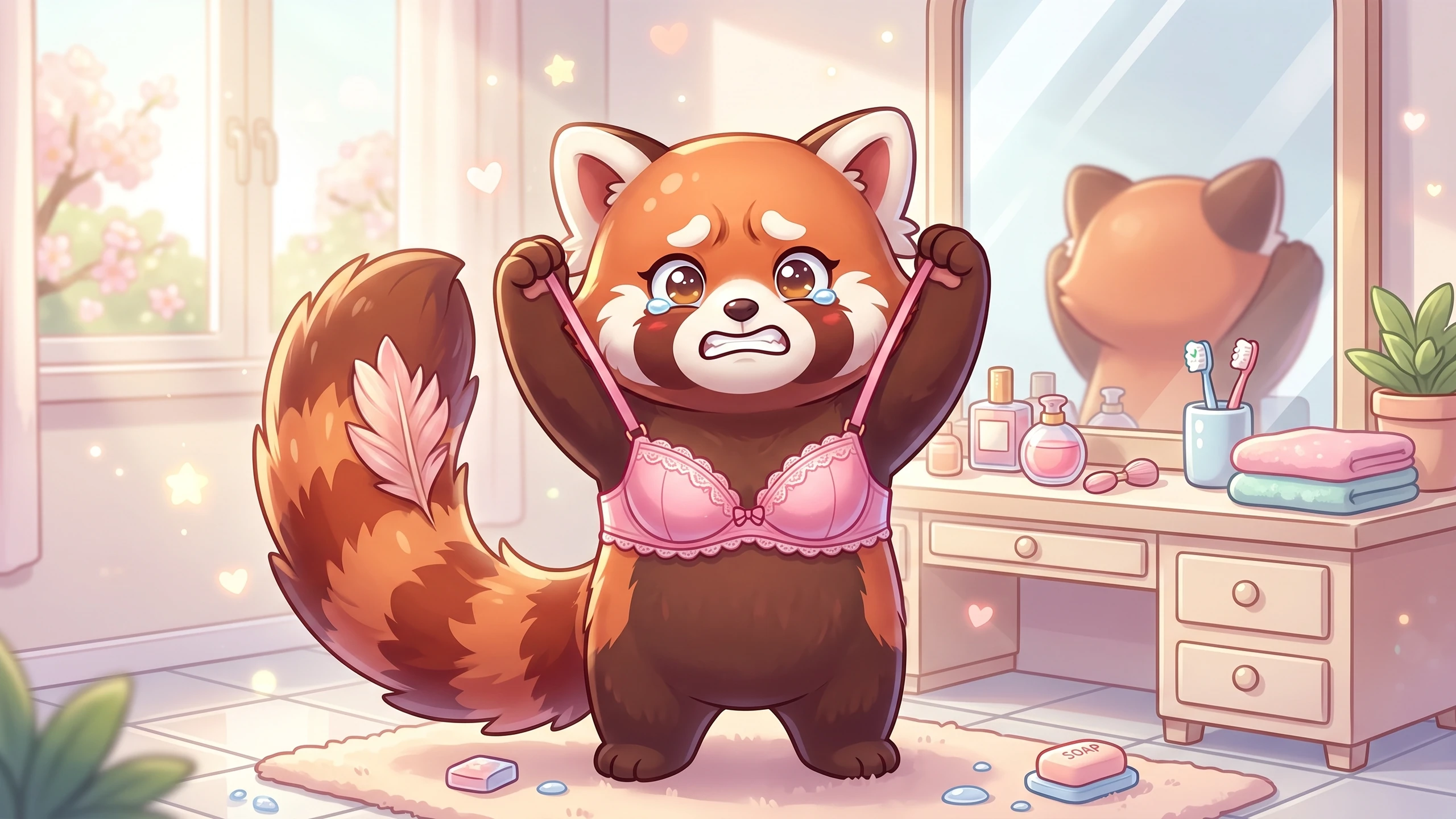
You can't stand being touched, your bra seems to have shrunk a size, and even the lightest brush makes you wince. Sore breasts before your period — known as cyclic mastalgia — are one of the most common features of premenstrual syndrome (PMS).
What's happening hormonally
After ovulation, the second half of your cycle is dominated by progesterone, produced by the corpus luteum in the ovary. This hormone prepares the body for a possible pregnancy, and one of its side effects is fluid retention in the tissues — including in the breasts. Ameli.fr describes premenstrual syndrome as involving, among other things, "breast swelling and pain" that begins a few days before your period.
The NHS confirms that breast tenderness is one of the most common premenstrual symptoms, alongside bloating, headaches, and mood swings. The exact causes are still not fully understood, but hormonal fluctuations across the cycle are the central mechanism put forward.
What varies enormously from person to person is the intensity. For some, it's a mild sensitivity. For others, the pain radiates toward the armpit or arm, and the breasts feel heavier and lumpier than usual — without there being a fixed lump.
Cyclical or not: how to tell the difference
Cyclical pain follows the rhythm of your cycle: it appears in the second half, often in the 7 to 10 days before your period, and generally disappears as soon as bleeding starts (or within the first few days). It often affects both breasts, mainly in the upper outer area.
Non-cyclical pain doesn't follow this pattern: it's often localised to one specific spot, can be constant, and isn't linked to the phases of your cycle. This second type is the one that warrants more medical attention.
If you track your symptoms over two or three cycles, you'll quickly see whether they come back at the same point each time — that's the simplest way to tell the two apart.
A few ways to get some relief
Nothing completely eliminates hormonal pain, but some adjustments can make it more manageable:
- Wearing a well-fitting bra, including at night when it pulls. Good support limits the movement that makes discomfort worse. A soft, wire-free sports bra may be more comfortable during this time.
- Cutting back on caffeine (coffee, strong tea, fizzy drinks): some people report a noticeable improvement, even though the scientific evidence remains limited.
- Paracetamol or ibuprofen, taken at the usual dose, can ease real pain — just as with any localised pain. If you're unsure what's right for your situation, your pharmacist can point you in the right direction.
- Regular physical activity is frequently mentioned in general PMS guidance, even though its direct effect on breast pain is hard to isolate.
If you're using hormonal contraception, be aware that it can sometimes increase breast tenderness — some pills more than others. It's worth mentioning to your doctor if the discomfort is significant.
When to see a doctor
Cyclic mastalgia, even when intense, is not in itself a sign of breast cancer. The NHS is clear on this: pain alone, without any other associated symptoms, is rarely a sign of serious disease.
See a doctor if:
- you notice a fixed lump, a localised thickened area that doesn't disappear after your period;
- the pain is one-sided and constant, with no apparent link to your cycle;
- the pain is severely disruptive and affects your sleep or daily life over several cycles in a row;
- you have nipple discharge unrelated to breastfeeding.
In these situations, a medical assessment can rule out any other cause and put an appropriate follow-up plan in place.
Tracking your symptoms really does help
Noting the onset date, intensity, and location of the pain over two or three cycles lets you confirm whether it's truly cyclical — and gives you useful information to share with a doctor if you do seek advice. The Plumm app lets you log this kind of symptom day by day, effortlessly.
If you want to better understand other premenstrual symptoms that often appear at the same time, you might also want to look at the articles on bloating and gas before your period or headaches before your period.